content warning: this article includes heavy spoilers and whining.
Five hundred twenty-five thousand, six hundred minutes
Five hundred twenty-five thousand moments so dear
Five hundred twenty-five thousand, six hundred minutes
How do you measure, measure a year?In daylights, in sunsets
In midnights, in cups of coffee
In inches, in miles
In laughter, in strife
In five hundred twenty-five thousand, six hundred minutes
How do you measure a year in the life?
-“Seasons of Love” from Rent, composition and lyrics by Jonathan Larson
Friend, I am troubled.
This dreadful year of ours has come to an end. It is -1° Celsius here, 30° Fahrenheit to you maybe, and Ray Bradbury. I don’t want to see any more of the outside world than the naked, thorny bushes in front of my bedroom window, I am buried under five blankets, surrounded by coffee, sweets of Christmas past, hybernating plants and scented candles. And I am troubled. Because I have made a dreadful mistake – I have fallen in love.
Well, technically, this is a 2024 mistake. Around this time last year, I had to make peace with the fact that I had become seriously besotted with someone I had once considered a terrible nuisance and then considered one of my most cherished friends. It was some real Pride and Prejudice-bullshit. Of course, it didn’t go nearly as well, as they have yet to meet me in the moors, Darcy-style. In fact, we don’t talk.
So even though Joe Wright’s 2005 take on Austen has rarely failed to pull me out of varying states of grief and misery, it does so here, and other, more seasonal favourites like Notting Hill and The Holiday don’t feel like home, either. This is not a winter for cutesy tropes, happy endings and races for your love. This is a winter for pessimism, bleak perspectives, aye, this winter is for renouncing the possibility of love itself.
Luckily, I stumbled upon a movie that is not only considered “a hidden gem” (would it surprise you that Criterion saved this movie from being low-res forever?), it is a deconstruction of the romantic comedy genre. Featuring great performances, tongue-in-cheek directing techniques and a scathing parody of male emotional thickness. Thirty years before late-noughties indie darling 500 Days of Summer, no less!
I am talking, as you well know because it’s in the title, about 1982s Chilly Scenes of Winter.
The Inherent Romanticism of Office Buildings
Meet Charles. He’s 27 and has a mind-numbingly boring office job that he more or less coasts through, a slightly withered house he inhereted from his grandma, and a limited circle of friends and family marked by disfunction. He is played by John Heard (of Cat People and Beaches-fame) who is enough of an everyman to fit the brief but has enough stand-out charm and sadness behind his eyes to be interesting for 90 minutes.
His roommate Sam (Peter Riegert) is not only a shameless leech, he’s also his best and only pal since school. His younger sister (Tarah Nutter) is in college and a bit bratty – we can gather that she used to look up to him, less so now. His mother (Gloria Grahaeme) is persistently mentally ill and threatens suicide bi-weekly. Also, he’s living in Utah and it is one frosty, bleak winter.
So it’s no wonder that Charles drinks in his office and laments the loss of the one good thing in his life: His former flame Laura (Mary-Beth Hurt, who was once married to actor John Hurt. Not to be confused with this movie’s John Heard). He met her at work, in a scenario that was labeled “a charming office flirtation” in the 70s and is appropriately called “a workplace violation” now. Laura was cute and charming and fit into his days like a warm hug and an Anvil in the morning, but alas, she left him. And Charles has not gotten over it.
Like, at all.
“Why exactly are you showing me where Laura lives?”, his sister asks with appropriate irritation as they are parked outside her house, in the dark. “Oh well”, says Charles, “I just thought you’d like to see it.”. Upon being asked what’s for dinner, Charles idly presents “Laura’s Chilli”, causing roomie Sam to snark: “Excuse me, don’t you mean ‘Laura’s recipe for Chilli? You had me worried. For a minute there I thought you meant Laura made the Chilli and it’s still in the ice box a year later“. The, Charles breaks the famed 4th wall – and we, the audience, finally get to see how this doomed romance went down the year before, as told by Charlie-Boy himself.
There are many brillant things about Chilly Scenes of Winter, but chief among them is the fact that this story will test our sympathies – for Charles, for Laura, and for all of us who have loved and erred.
Nice Guy He Ain’t
Of course, in the beginning, we’re rooting for our protagonist. How couldn’t we, since director Joan Micklin Silver makes this pretty average schmuck very personable. A character directly adressing the camera (and audience) is common and overused now, but next to all the 1970s-kitchen-sink-optics, it’s pretty unexpected and feels fresh. Perhaps the greatest scene invoking relatability is near the start, when Charles enters his car after work, soaked from the rain, and Laura appears in the backseat. Charles is pleasantly surprised, and they have a playful interaction about his dented glasses. Mid-conversation, Laura has disappeared – and we realize that Charles only daydreamed about her being there.
Is this pathetic? For sure. But admit it, if you’ve ever had a breakup that cut deep, you’ve been there. I sure have. So far, I haven’t had full-blown conversations with invisible exes, but I could swear that a lot of people on my way to work look like the person I’m in love with right now. I used to be a heavy sleeper, but currently, I find myself sort-of-waking-up at 3 am (you know, the realm between sleep and being awake when you’re not sure you’re fully cosncious or dreaming? It’s that). And every night I am certain that I can feel the body of this person pressed against mine and if I’d turn around, I could vanish into the scape of their neck and smell them. But of course, they’re not there either, and actually, I’ve woken up with them exactly once and am starting to forget what their body actually felt like.
There is a comfort to these delusions and fantasies about what-ifs. Ken Lauber’s jazzy score is only nearly as cozy as daydreams about your love can be. So we can laugh at Charles building a dollhouse replica of Laura’s home or him reassuring us that he’s not going to call her and beg her to come back, only to do so a cut later. In fact, that’s what Joan Micklin Silver wants us to do. But don’t fool yourself: We’re laughing with Charles, not at him. As we’re sitting in the same boat. Headed down the river of idle despair.
There’s also a double edge to this humor. On one side is this moment of self-recognition we’re bound to have and on the other, it exposes the reality of the situation: Charles is not the hero. Laura is not waiting for him, because over here, in reality, she went back to her husband Ox (Mark Metcalf), whom she was briefly seperated from when she and Charles had their fling. Yeah, that’s another big reveal: Charles has been pining a whole year for a woman he was seeing for two months.
These little epiphanies start slipping into Charles’ narrative more and more as the film goes on, and little by little, we get the bigger picture and start liking him less. When we’re shown how Charles practically begged Laura for a date at their workplace, we’re also shown how clear she made it that she is not looking for anything serious. We get to see Charles’ inability to grasp her turmoil about leaving her marriage and a stepdaughter she adores, we get to see his nasty bouts of jealousy and his clingyness. We get to hear him say “I’m going to rape you” during a fight. A curtain-lifting moment if there ever was one.
This narrative, a curvaceous boy-next-door-to-creep-pipeline, is surely no accident coming from two women: Director Micklin Silver, who specialized in romantic comedies peppered with biting observations (see 1988s Crossing Delancey) and Ann Beattie, author of the 1976 novel the film was based on. Chilly Scenes of Winter occasionally hints at a specifically male type of possessiveness in relationships. But there are no grand declarations of gender essentialism. Charles and Laura aren’t meant to be strawpeople for what “all men” and “all women” in relationships are like.
Nevertheless, as we were able to see in the more mainstream reception of the already mentioned 500 Days of Summer (a blatant ripoff or a modern take, depending on which cinephile you ask), it is a ever-popular element to latch onto. From ca. 2013 to 2020, audiences have fiercely debated: Who was in the wrong – Tom or Summer? And who is Chilly Scenes of Winter‘s villain – Charles or Laura?
Anxious Attachment Anonymous
Surprise surprise, the answer is neither of them.
Now, this might be a downright bonkers statement after I have relayed Charles’ rape threat to you, but hear me out: I am not arguing that both of these people have equal standing. Make no mistake, Charles is way more flawed. Nevertheless, Chilly Scenes of Winter lends him humanity, not least because we get to see a movie of his life and a few snapshots of Laura’s. That’s another element in this unequal standing of the characters: We never, ever, get to see the world or the relationship from Laura’s eyes, so it’s easier to be puzzled by her actions.
Laura is every bit a confusing person as she is confused. Mary-Beth Hurt expertly shapes her into a woman beyond Charles’ imagination, somebody who has a cute chuckle and a definitive joie-de-vivre whilst being obviously at a crossroads in her life, unsure where to go next (and with whom). She is very angry at herself for “leaving a perfectly fine husband” like Ox (who is quite a nice guy, if a bit daft, adding to the “no villains”-pile) and she won’t commit to Charles, but she won’t let him fully go, either.
For every insanity that borders on stalking he throws at her, she keeps jogging in front of him with a carrot. Charles catches her crying in the kitchen on their first date and politely asks if she wants him to leave? Laura declines and falls into his arms. He asks her to live with him mere weeks after dating? She says no, then gets angry when he doesn’t call one Saturday, then moves in with him. He asks to see her after she gets back together with Ox? She feigns an illness to not have to outright tell him no. He talks about marriage, a future together and many of her famed chocolate soufflés? She dodges.
So again, maybe the screentime works in his favor, maybe I haven’t been in Laura’s position before – but I relate with Charles there, because I have been in his many a time.
In recent years, so-called “attachment styles” have been the en vogue thing on the amateur psychology end of social media. The theory is that there are three basic ways in which people approach romantic relationships: the “anxious” type that has been burned many a times before and therefore seems clingy, needy and always hungry for commitment from their significant other. Then there’s the “avoidant type”, who’s also been burned before, but has consequently decided to not fuck with any type of commitment again to avoid the same hurt (as in pain, not John Heard, John Hurt or Mary-Beth Hurt), often self-sabotaging what could have been a perfectly happy union. The third type, the “secure” ones, are just lucky little bitches who have never had to be sexually exploited by a six-month situationship and always had a great relationship with their parents, I guess.
This is all likely bullshit. I was only recently informed by my therapist that the “stages of grief” theory is not a thing, so I obviously am easily bamboozled by pseudoscience like that. But the “attachment style”-theory has clearly struck a chord with many a person, me included. And when I saw this movie for the first time, observed Charles in all of his needy glory and possessive uglyness, I felt like him staring at me was not just a filming technique. It was a call-out.
How often had I begged a significant other for clarity, for a label to put on our relationship, for their time, attention and signs of devotion? (My therapist didn’t call this behaviour anxious attachment, he diagnosed me with having “an intolerance for uncertainty”). How often did I write poems, left gifts at their doorstep and cooked their favourite meal, hoping that if I’d be perfect, they just had to love me back and never leave? (or are acts of service just my love language? Are love languages also not real?).
More often than not, I’d be partnered with my very own Laura’s: My first big love, a girl from Syria, spent three months cooing in my ear that she never felt this connected to someone and that she would remember me for the rest of our lives. Accordingly, I started taking up Arabic, since our 2.5 children would naturally be brought up bilingual. Then she ended things because she “wasn’t looking for something this serious”. My last girlfriend, who was (and I am not lying) also named Laura, wasn’t the sweet-talking, love-bombing type. She just drove me to work, got me flowers, gently caressed my back when she’d sleep over and sent me colour schemes for our wedding. Accordingly, I researched immigration conditions for when we’d move to the U.S. so she could get a PhD and I could be her arm candy when she got that Nobel price. She confessed to me that commitment was scary to her while we were sunbathing in the park. I broke up with her a few weeks later because our dates grew less and less, and her excuses grew bigger and bigger.
The person I am thinking about right now may have told me some of the loveliest things that I have ever heard, with that clumsy earnestness only they posess. They also said pretty early on that they felt they “knew about my standards, and didn’t think they could live up to them”. Instead of asking more questions, instead of seeing their insecurities, I closed up like an oyster.
Neither of these people are villains, much like this movie’s Laura isn’t one. In pretty much all of my relationships, I could see the problems from a mile away and chose to ignore them. If Adam and Eve gained wisdom from biting into an apple, I have bitten into the same apple many times and thought that it was a bit sour, continued to eat it, and then wondered why my tummy and my heart hurt.
In Charles, I can also recognize the issues beyond the relationship troubles: Behind every person who has a chronic need to be loved, behind every “hopeless romantic” is a home situation that makes romanticising your life a necessity. Wasting your life away in a meaningless 9-5 is horrible enough, but having to pluck your mother from a bath every other day because she wants to kill herself and having almost no village (of friends and family) to lean onto is a truly terrible hand to be dealt.
Once again, there are no real villains present: Charles’ mother seems to really love him and is simply too ill to nurture his needs, his stepfather, although dull, tries his darndest to form a connection with him and Sam, although a strain on the nerves and finances, proves to be a loyal friend. People say that in order to be loved, you have to love yourself first. I say find yourself someone who matches your disfunctions, because we all have them and the fewest of us manage to get rid of them in this lifetime.
Originally, Chilly Scenes of Winter was realeased in 1979 under the generic, studio-mandated title Head Over Heels, which had a generic ending to match: All the troubles are tossed aside last minute, Laura returns and Charles gets the fantasy romance he longed for. For real. That ending is true to Beattie’s novel. When the movie entered the festival circuit, it flopped immediately and resoundingly. Three years later, the movie is re-cut and re-released, the novel’s title is re-installed, Charles doesn’t get the girl and the cult following is building up – and has been ever since.
Epilogue, in Which I Reject Cynicism and Choose Lilacs
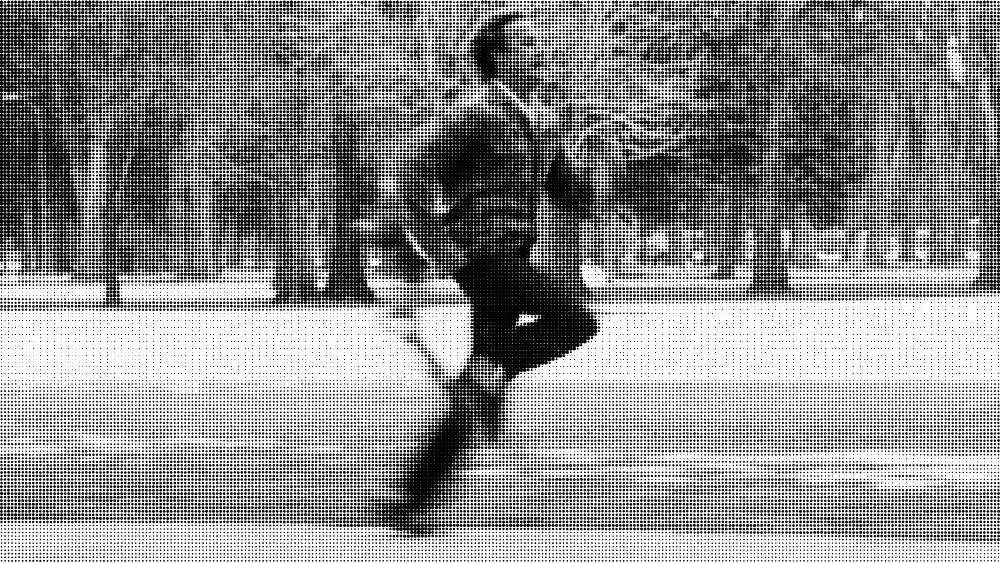
I think the big grand secret why audiences love Chilly Scenes of Winter and hated Head Over Heels is thus: Many of us have been a Charles or a Laura and so we know that as a rule, the happy ending exists only in our head, and the sombre, sad ending is the one we will find ourselves in time and time again. Allowing the story to end there, hearing Charles say “It’s not that it doesn’t still hurt. It’s that you get used to it.” and seeing him take a first jog into moving on makes us feel seen in our pain and opens a door. Feel the feeling and move ahead.
I certainly fantasize about my person showing up at my door, and in this scenario we don’t say anything, we just cry and hug each other and all the stupid stuff is forgotten and we cozy up together in my bed and caress our arms and debate which potato-based dish we’re having for dinner later. But they won’t show up. They haven’t shown up for me in a while, and I have probably failed them in ways I will never know.
As I sink deeper into my sheets, alone, and watch the snow fall outside, I desperately try to hold onto my strong belief that they were the love of my life and we were perfect for each other, whilst coming to grips with the knowledge that we didn’t work. I have bitten into the apple, it is indeed sour, by now, I should have thrown it back into the orchard of cursed relationship memories.
But I don’t want to do that. Maybe it’s because this was the first time somebody told me that they loved me, and how can you get rid of a milestone like that? And consequently, wouldn’t I deny myself feeling the full grief that comes with losing it all?
Mostly, it’s because I genuinely loved them and still do. Not just for what we could have been, but for who they, presently, are. And isn’t that a remarkable thing? Feeling that strongly for someone for no reason at all?
It has taken some time, but their favourite vegan chocolate ice cream has found its way back into my fridge. There are still a lot of tiny moments from my days at work that I imagine sharing with them, and in my head, I can hear their exact dry, snarky comment. I long for spring, not to be rid of this lovesickness as fast as possible, but because the lilacs, their favourite flower, will be in bloom.
Would this winter be nearly as chilly if the spring hadn’t been so radiant, if I hadn’t been so happy? I loved this person for more than a year, a time that Jonathan Larson wouldn’t be able to put into cups of coffee. I won’t count the time until this grief has passed, either. Not in empty ice cream tubs, not in tears, not in flowers.
I should probably just do some lapses in the park.
–
 thistle
Leave a comment